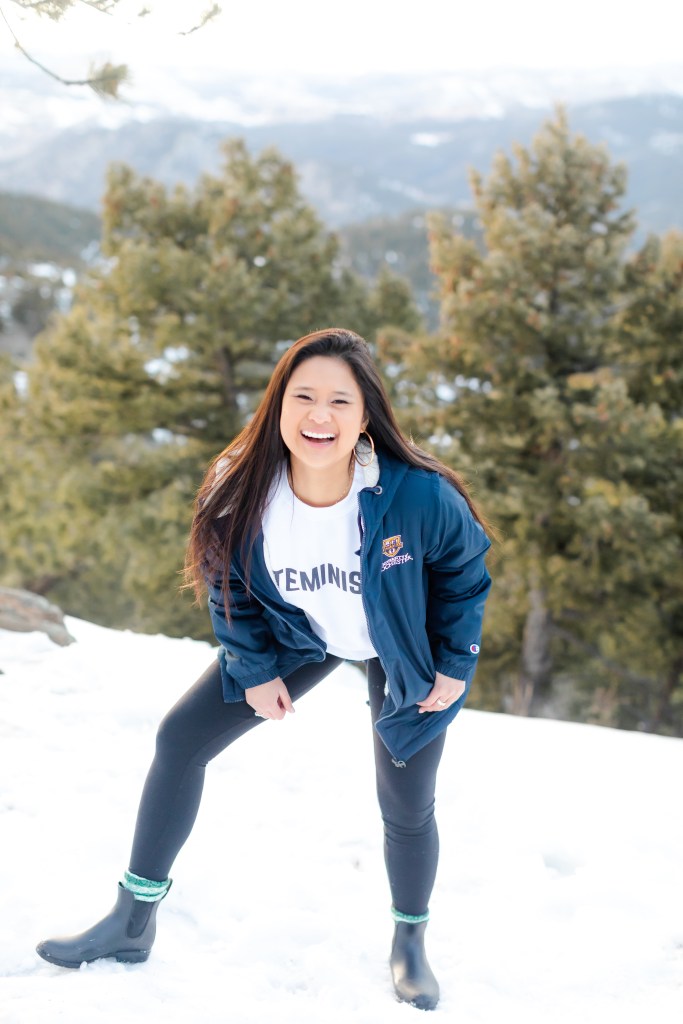
Vanessa Cao, Ph.D.
University of Rochester | Department of Psychology | Mount Hope Family Center
CV available below, resume is available upon request.
Born and raised in central Pennsylvania, my academic career began when I started to attend The Pennsylvania State University in 2015. In 2018, I earned a B.S. in Biology with a concentration in Neuroscience and a minor in Psychology. As an undergraduate, I worked as a research assistant and lab manager in Dr. Amy Marshall’s Relationships and Stress Research Lab, where I explored the mechanisms underlying aggression in romantic relationships. This research focused on how trauma-related stress (e.g., PTSD) contributes to the perpetration of intimate partner violence and affects parent–child dynamics.
After graduation, I continued building experience in psychological science as a Research Coordinator for the ABC Research Group at Penn State’s College of Medicine. This lab investigated the development of externalizing behaviors in children, including ADHD, oppositional defiant disorder (ODD), and conduct disorder (CD). During my time there, I gained extensive experience in neuroimaging methods (e.g., EEG, fMRI), child behavioral assessments, and clinical trial coordination. I also expanded my quantitative analysis skills through regular use of SPSS and R, and developed a growing interest in aggression and callous-unemotional (CU) traits in children.
In Fall 2020, I began my Ph.D. in Developmental Psychology with a focus in Quantitative Methods at the University of Rochester, under the mentorship of Dr. Patrick Davies and successfully defended my dissertation in March 2026. My research examines how family and contextual adversity shape children’s socioemotional development through the interplay of emotional, cognitive, and physiological systems. Guided by developmental systems and resilience frameworks, I study the mechanisms that explain why some children adapt successfully in the face of stress while others develop persistent socioemotional difficulties. My work focuses on three interconnected areas: (1) identifying the emotional and physiological processes that give rise to callous–unemotional traits and related adjustment problems, (2) clarifying when and how family dynamics such as parenting and interparental conflict serve as sources of risk or resilience, and (3) uncovering patterns of sensitivity and adaptation that reveal how adversity reorganizes children’s developmental systems. Across these areas, I use multi-method, longitudinal approaches to capture children’s regulation and adaptation over time, with the goal of informing prevention and intervention efforts that strengthen resilience in everyday family and community contexts.
In addition to my academic research, I am actively involved in translational, community-facing work in Rochester that connects developmental science with nonprofit and policy-relevant thinking. Through additional work with The Children’s Agenda, Children’s Institute, and Mount Hope Family Center, I work towards integrating applied evaluation and data-informed storytelling to support the strengthen of intervention and provention programming, and improve access to resources for children and families. This work reflects my broader commitment to ensuring that rigorous research can be meaningfully translated into practical tools and actionable insights for the community.
Outside of research I can be found taking on new hobbies (current hyperfixation is sewing), cooking & trying new foods, taking pictures of my pets, fostering too many cats, and getting outdoors to hike and kayak.
 Vanessa Cao